Important Note
This article is intended for educational purposes only and is not a substitute for medical, psychological, or sexual health assessment. Sexual desire is influenced by many factors, including physical health, medications, hormones, stress, relationship dynamics, mental health, trauma history, and personal experiences. If you have concerns about changes in desire, pain, distress, or sexual functioning, consider connecting with a qualified healthcare or mental health professional.
Many people grow up and enter relationships believing that sexual desire should happen in one specific way:
You should feel attracted.
You should feel interested.
You should want sex before anything else happens.
For many people, especially those in long-term relationships, this understanding of desire can create confusion, shame, and unnecessary pressure.
They may wonder:
“Why don’t I feel desire the way I used to?”
“Does something mean something is wrong with my relationship?”
“Why do I love my partner but not feel spontaneously sexual?”
“Why does desire seem to appear only after we start connecting?”
The answer may be that your desire system works differently than you thought.
While some people experience spontaneous desire, others experience responsive desire: where desire emerges after connection, touch, relaxation, arousal, or positive sexual experiences begin.
Understanding the difference between these patterns can help reduce shame, improve communication, and create a healthier approach to intimacy.
What Is Spontaneous Desire?
Spontaneous desire refers to sexual interest that appears before sexual activity begins.
Someone experiencing spontaneous desire may notice:
Feeling sexual attraction toward their partner
Thinking about sex throughout the day
Wanting physical intimacy without needing a specific trigger
Feeling motivated to initiate sexual connection
This is often the type of desire portrayed in movies, media, and early relationship stages.
For some people, spontaneous desire is their primary experience.
However, it is not the only way desire works.
What Is Responsive Desire?
Responsive desire refers to desire that develops in response to positive experiences, connection, touch, emotional intimacy, or pleasurable sensations.
Someone experiencing responsive desire may not begin the evening thinking:
“I want sex.”
Instead, desire may develop after:
Feeling emotionally connected
Having affectionate touch
Relaxing after a stressful day
Engaging in sensual experiences
Feeling safe and present with their partner
Responsive desire might sound like:
“I wasn’t thinking about sex, but once we started kissing, I became interested.”
or:
“I don’t usually crave sex out of nowhere, but I enjoy it when we reconnect.”
Responsive desire does not mean someone is uninterested in sex. It means the pathway into desire may be different.
Is Responsive Desire More Common in Women?
Research suggests that sexual desire is complex and varies greatly between individuals.
Historically, many models of sexuality were based on a more linear sequence:
Desire → Arousal → Orgasm
However, researchers have identified that many people—particularly in long-term relationships and many women—experience sexual response in a more circular or overlapping way.
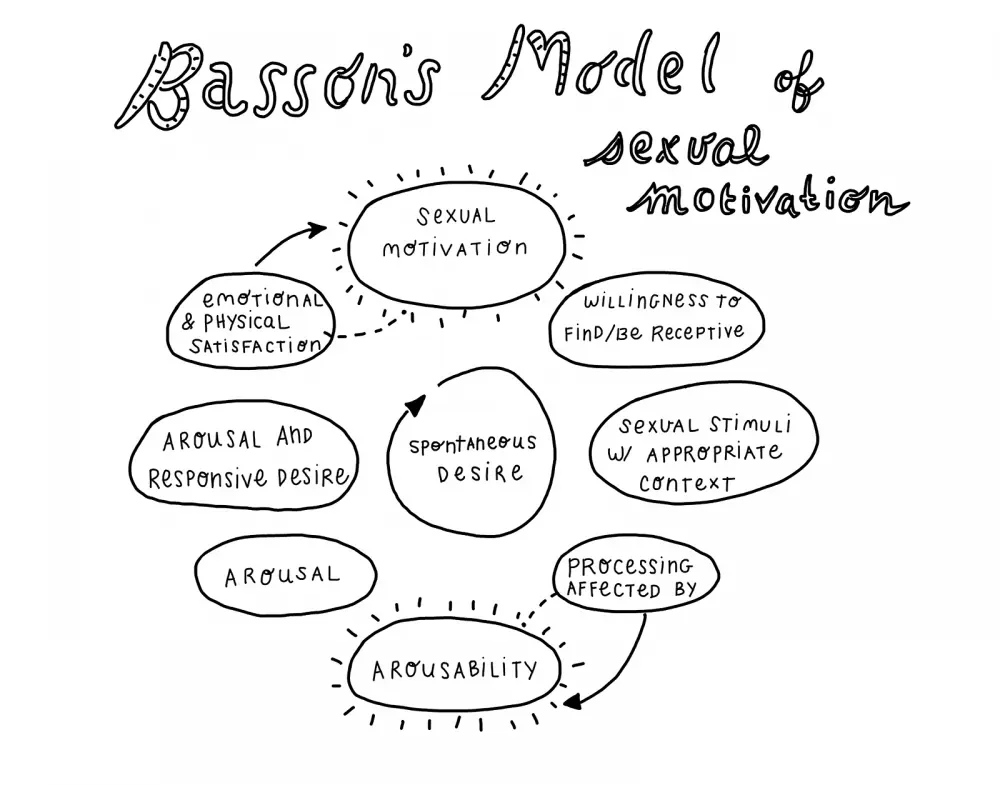
The work of Rosemary Basson challenged traditional models by highlighting that intimacy, emotional connection, arousal, and desire can influence each other rather than always occurring in a fixed order.
It is important to avoid assuming that all women experience responsive desire or that all men experience spontaneous desire. Sexual response is influenced by many individual and contextual factors.
Why Does Desire Change Over Time?
Many people experience changes in sexual desire throughout their lives.
This is normal.
Desire can be influenced by:
Stress and Mental Load
Stress is one of the most common factors affecting sexual desire.
When your nervous system is focused on:
Work demands
Parenting responsibilities
Financial stress
Caregiving
Conflict
Exhaustion
it can become more difficult to access curiosity, pleasure, and sexual connection.
Many people do not lack desire, they lack the conditions that allow desire to emerge.
Relationship Dynamics
Sexual desire does not exist separately from the relationship.
Factors that may influence desire include:
Emotional closeness
Feeling appreciated
Resentment
Unresolved conflict
Feeling disconnected
Feeling pressured
Communication patterns
For many couples, improving emotional connection can become an important part of rebuilding sexual connection.
Hormonal and Physical Changes
Sexual desire can shift throughout life due to:
Pregnancy and postpartum changes
Breastfeeding
Perimenopause and menopause
Aging
Sleep changes
Illness
Medications
Changes in desire are not always psychological. A biopsychosocial approach recognizes that sexuality is influenced by the interaction between body, mind, relationships, and environment.
Desire Is Not the Same as Attraction
One of the most painful misunderstandings in relationships is:
“My partner doesn’t want sex, so they must not want me.”
However, desire and attraction are not the same thing.
Someone can:
Love their partner deeply
Feel emotionally connected
Find their partner attractive
Value their relationship
and still experience lower spontaneous desire.
The Role of Pressure in Sexual Desire
Pressure is one of the most common factors that can interfere with desire.
When sex becomes associated with:
Obligation
Guilt
Fear of disappointing a partner
Conflict
Feeling responsible for someone else’s emotions
Sexual connection can begin to feel like another demand.
For many people, desire needs:
Safety
Choice
Playfulness
Relaxation
Emotional connection
Permission to say yes or no
This is why consent and autonomy are essential parts of healthy sexuality.
Understanding Desire Differences Between Partners
Many couples experience what sex therapists call desire discrepancy: when partners have different levels or timing of sexual desire.
This is extremely common.
One partner may experience:
“I want sex because I feel close.”
The other may experience:
“I need to feel close before I want sex.”
Neither person is wrong.
The challenge is learning how to understand each other’s pathways to connection.
How Couples Can Support Responsive Desire
1. Stop Waiting for Desire to Appear Before Connecting
For people with responsive desire, desire may not arrive first.
Instead, connection may create the conditions where desire can develop.
This does not mean forcing yourself into sexual activity.
It means exploring what might support you to be open to intimacy.
2. Expand What Counts as Sexual Connection
Many couples unintentionally make penetration the only measure of intimacy.
Consider expanding intimacy to include:
Touch
Affection
Kissing
Massage
Playfulness
Emotional vulnerability
Flirting
Shared experiences
Connection does not always have to lead to sex.
3. Reduce the Pressure Cycle
A common pattern looks like this:
One partner wants more sex → the other feels pressure → pressure decreases desire → the first partner feels rejected → more pressure develops.
Breaking this cycle requires compassion for both partners.
The goal is not to identify who is “right.”
The goal is to understand the pattern.
4. Create Space for Desire
Many people wait until they feel relaxed before connecting sexually.
However, modern life often does not naturally create relaxation.
Creating intentional space may include:
Scheduling intimacy
Reducing distractions
Prioritizing rest
Creating emotional connection
Talking about desires outside of sexual moments
Scheduling intimacy does not make it less romantic. For many couples, it creates the opportunity for desire to emerge.
Therapeutic Approaches That Can Support Sexual Desire
Sex Therapy
Sex therapy can help individuals and couples explore:
Desire differences
Sexual communication
Shame
Body image
Sexual confidence
Intimacy patterns
Emotionally Focused Therapy (EFT)
EFT can help couples understand the emotional patterns underneath sexual struggles, including:
Feeling rejected
Feeling pressured
Fear of disconnection
Difficulty expressing needs
Gottman Method Couples Therapy
Gottman-based approaches explore friendship, emotional connection, communication, conflict patterns, and intimacy—all of which influence sexual connection.
Acceptance and Commitment Therapy (ACT)
ACT can support people in:
Reducing shame
Connecting with values
Developing self-compassion
Moving toward meaningful intimacy rather than performance-based sexuality
Mindfulness-Based Approaches
Mindfulness-based sex therapy approaches focus on:
Being present in the body
Reducing performance pressure
Increasing awareness of pleasure
Improving connection with sensations and emotions
Final Thoughts
Many people believe that losing spontaneous desire means something is wrong with them or their relationship. Often, the reality is much more complicated.
Desire changes.
Bodies change.
Relationships change.
Life circumstances change.
Learning how your desire works, and communicating about it openly, can help create a more connected and fulfilling intimate relationship.
